 English



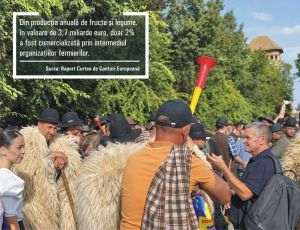
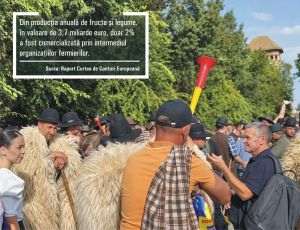
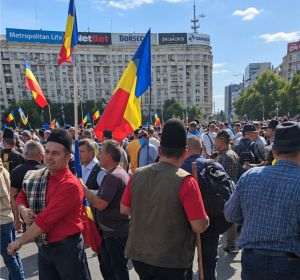
Sheep farmers protested yesterday in Victory Square. The protest did not draw shepherds from all 44,000 sheep and goat farms in Romania-a figure derived from data on the Ministry of Agriculture and the Agency for Payments and Intervention in Agriculture websites-as claimed in the flyers and posts widely circulated on social media. Nevertheless, enough shepherds turned out to block traffic, mobilize the Gendarmerie, and provide AUR lawmakers with excellent footage for new Facebook and TikTok posts. Instead of the 200,000 farmers announced in recent days, just over 3,000 people showed up.
The cause of the protest, however, is extremely serious. Sheep and goat farmers are reeling from the extension-until December 31, 2026-of restrictions on live animal exports, imposed due to outbreaks of Peste des Petits Ruminants (PPR) and sheep and goat pox. Shepherds report massive losses, the culling of animals, and delayed or unpaid compensation, alongside a veterinary authority that seems to have only acknowledged the crisis once it spilled onto the streets. Exports ground to a halt quickly; solutions are moving much more slowly. Regarding the losses reported by sheep farmers, it should be noted that over the past three years, sheep and goat breeders nationwide have received euro80.96 million annually under Pillar 1 of the Common Agricultural Policy-specifically through PD-24 (Coupled Income Support for sheep/goats). Added to this amount was euro721 million for the 2023-2025 period, sourced from the national budget via ANT 9 (Transitional National Aid for sheep and goats) and emergency aid. This funding does not include payments made by authorities to these farmers for individual compensation regarding animals killed during disease outbreaks, breed improvement aid, diesel excise duty refunds, or AFIR investment projects. While the funds did reach the farmers, they evidently deemed them insufficient, given their decision yesterday to travel to the capital and stage spontaneous, unauthorized protests in Victory Square and, subsequently, Constitution Square.
One of the key organizers was Ionică Sterp, known online as "Ciobanul Ionică" (Shepherd Ionică). His initial message focused on the survival of farms and halting the slaughter of animals. However, once the protest reached Victory Square, the sheep quickly became a political prop. Supporters of Călin Georgescu and AUR-along with MPs from that party, Ciprian Paraschiv and Lidia Vadim-Tudor-appeared alongside the breeders, ready to "save agriculture," preferably live on air and from an angle favorable to the news cameras. Furthermore, chants such as "Round 2: Go Back" and "Snap Elections" were heard in Victory Square, alongside messages supporting Călin Georgescu. Simultaneously, AUR organized an "Open House" event at its headquarters-located, by a remarkable geographical coincidence, right next to the protest site. George Simion urged the demonstrators to remain peaceful and not to rise to provocations. The party opened its doors, and the protest provided the crowd.
Farmers submitted a substantial list of demands to the Government. They are calling for the resumption of exports where the epidemiological situation permits, full and rapid compensation for livestock breeders whose animals were culled, support for drought-affected farms, agricultural diesel subsidized at the point of purchase, and protection in their dealings with banks, leasing companies, non-bank financial institutions (NBFIs), and input suppliers. The list of requests also includes a review of farm taxation, the recovery of amounts withheld from subsidies, measures to combat unfair commercial practices in the grain market, fiscal predictability, and the protection of Romanian producers within the framework of the EU-Mercosur agreement.
According to a press release issued by the Government, Prime Minister Ilie Bolojan acknowledged the demands submitted by the "Professional Association of Shepherds" (APC) and discussed potential solutions to the issues raised with Deputy Prime Minister and Acting Minister of Agriculture and Rural Development, Tanczos Barna. "Some of the demands registered today had also been raised during the six previous meetings between representatives of the sheep farming sector and Government officials," the Executive's press release stated. Unfortunately, around midday, the protest shifted from agricultural grievances to the by-now classic repertoire of Romanian demonstrations. Some participants breached the security cordon, moved barriers, and threw various objects-including clubs-at the gendarmes. The gendarmes responded with tear gas. Fifteen people were taken to the police station for assaulting law enforcement officers, and 18 protesters required medical attention. MEP Luis Lazarus also took part in the protest; he was among the demonstrators affected by the tear gas used by the gendarmes. Furthermore, MEP Diana Iovanovici-Şoşoacă called upon citizens to occupy the capital and overthrow the "dictatorship."
What is certain is that, yesterday, Victory Square and the Victory Underpass were blocked for several hours, and tram services were halted. The Romanian agricultural sector failed to unblock exports, yet it did temporarily block the capital's city center.
















 Euro
Euro Dolar SUA
 Franc elveţian
 Liră sterlină
 Gram de aur


























Reader's Opinion